
How to Build a Practice Routine for Music Production
Producercise Time?
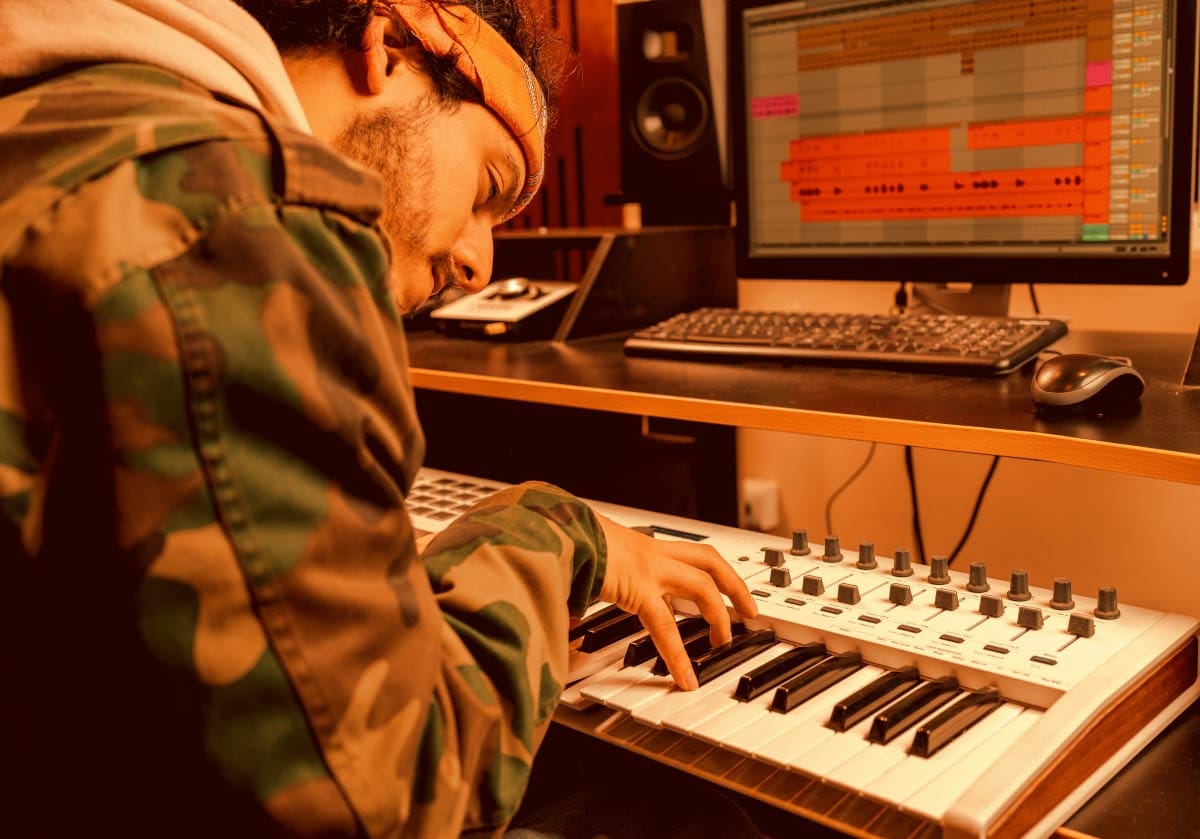
I have met plenty of producers who stumble forward from song to song. Sure, they get stuff done, and some of it sounds good, too. But there is a key thing missing: their "producercise" time. You know - when you actually exercise those producer muscles without the pressure of putting out a whole song.
You see, most beginner producers approach music creation purely on inspiration. They wait for lightning to strike, sit down at their DAW without a clear plan, and end up staring at a blank timeline for two hours. When inspiration fails to arrive, progress stalls.
Building a clear, repeatable system is central to building a productive music workflow. A practice routine turns sporadic bursts of motivation into a steady habit, helping you build real technical confidence and finish more songs.
Creativity is a funny thing, as it is pretty hard to pin down from a scientific standpoint because it is rather the opposite of science, you know? But with practice, you can get into a creative state faster. You can also clear the runway better for deeper creativity.
This guide is designed to give you actionable ways not only to build your skills but also specific practice drills that you can start doing today to amp up your results.
Let's do this!
Why You Need a Practice Routine for Music Production
A practice routine bridges the gap between where your skills are today and where you want them to be. In music production, talent is secondary to consistent execution.
This is how you develop up the skills to pay the bills.
Without a routine, your growth is choppy. You might spend three weeks obsessing over synth patches, neglect arrangement entirely, and then wonder why your songs stall out as unfinished 8-bar loops. You find weak spots and then wonder why you didn't learn more about that part of music-making earlier.
A structured routine ensures all areas of your production toolkit grow evenly. A routine removes decision fatigue.
When you schedule your focus areas in advance, you skip the endless internal debate about what to work on and jump straight into create mode.
7 Golden Tips for Better Results from Practice Sessions
Here are several key tips for maximizing your results from practice sessions:
Short Regular Practice Beats Infrequent Large Sessions: Your brain benefits from digestible chunks - lock in your training with smaller, more regular practice sessions instead of waiting to do a marathon session every two weeks.
Practice 'Play' Sessions: When you get curious like a child and just play for the purpose of play, your brain lights up. Memory retention and excitement improve dramatically. Use this to help remove judgment during practice - quiet the inner critic and have more fun with your practice sessions.
Keep Them Focused: In a single, shorter practice session, only focus on one thing. You aren't looking to eat a multi-course meal of learning here... the key is to just have a little 'snack' and lock that in tight. If you are all over the place in your practice session, you won't make progress.
No Judgment: When your ego comes into play and you start judging your work during practice sessions, you not only kill your creativity, but you strengthen the inner critic. Kill the judgment and kill the inner critic.
Plan Your Practice Sessions: Plan your practice sessions each week so you are checking the boxes you need to across the days. Much like with exercise, if you do the same exercise over and over but neglect other areas, you will get lopsided results: the area that you keep hitting won't grow so much and the other areas will suffer greatly. Keep a little checklist of the topics you want to practice and then check them off as you move through the days. Once you clear the base list, go play with whatever you want if you still have time left.
Variety is Your Friend: Our brains love to be stimulated in a variety of ways. So, when you are planning your weekly practice sessions, put a good mix of different topics in there. One day might be just playing with melody bits. Another might be practicing rhythm work. Still another could be doing mini speed song creation or mixing drills. Keep things fresh and you will compound your growth massively.
Huge Time Commitments Aren't Necessary: If you think that practicing for hours and hours a day is going to give you a pile of benefit, the answer sadly is that is not the case. Your learning brain is like an empty tank when you start. You learn and practice and it fills up the tank. Once it gets up to the limit, time is needed to process that information. Don't overflow the tank.
Structuring Your Daily and Weekly Music Sessions
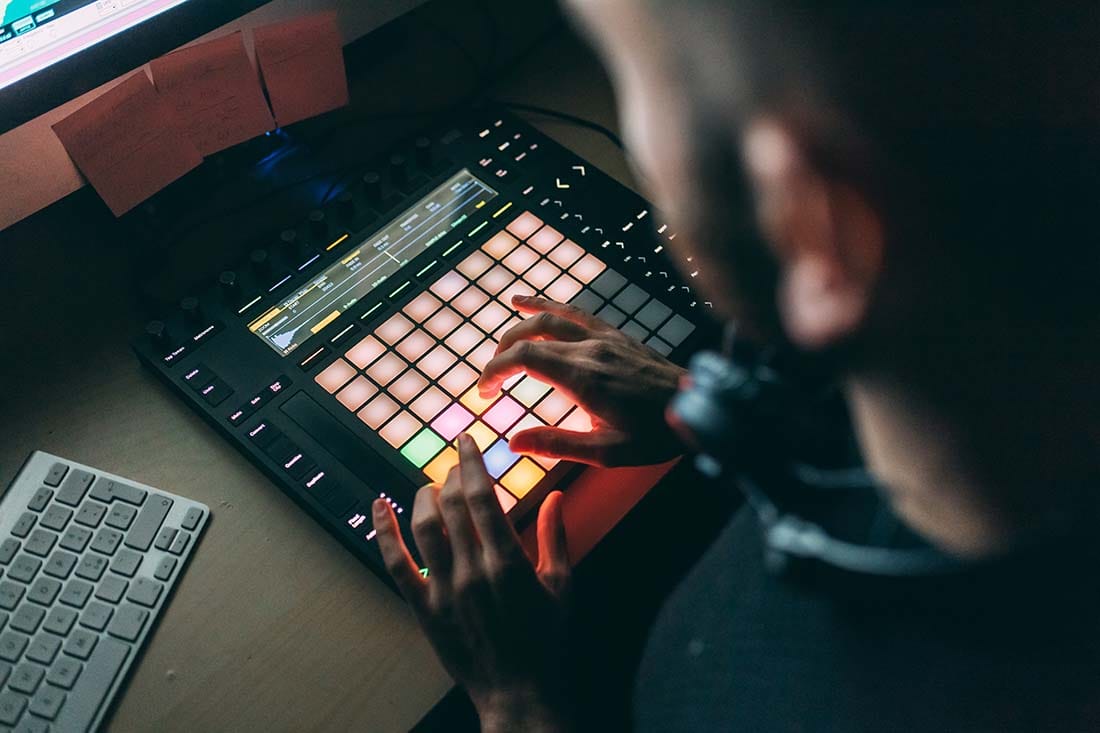
Let's build on the seven tips to better practice sessions. You already learned that you do not need four uninterrupted hours every day to make serious progress. Consistency beats intensity every single time. Let's dig into that a little deeper.
The 20-Minute Daily Rule
We've all been in a position where the demands of life put constraints on our time to practice. If you have a busy schedule, commit to just twenty minutes of dedicated studio time per day. Twenty focused minutes daily equals over two hours of intentional practice every week.
And, if you don't think you have 20 minutes, just set down the phone for a bit and watch how you find time. Prioritize this time like you would anything else that is critical in your life.
During these short sessions, keep your objective singular and small. Do not try to write, mix, and master a track in twenty minutes. Instead, pick one specific task: create three drum loops, design two bass patches, build six melody starting points, or map out an arrangement structure for an existing idea, etc.
Weekly Block Scheduling
If you have larger blocks of time available, organize your week by dedicating specific days to specific stages of production:
Monday (Sound Design): Build presets, synthesize basses, and curate sample kits.
Tuesday (Songwriting & Sketching): Draft chord progressions, melodies, and top-line ideas.
Wednesday (Arrangement): Turn your best 8-bar loop into a full 3-minute song structure.
Thursday (Sound Shaping & Processing): Apply EQ, compression, and spatial effects to refine your sounds.
Friday (Free Creation & Polish): Experiment without rules or focus on finishing active projects.
By assigning tasks to specific days, you avoid trying to write, edit, and mix simultaneously.
Now, if you don't have consistent time each day where you can block out this kind of work, then you need to be more flexible to make it work. My schedule is pretty variable, so I do two things to make my music work work:
1 - If some free time pops up, I strike like a cobra and do some music in that window. I fill the gaps here and there and it adds up over time.
2 - I block out key moments during the week when I can focus on music for a longer period of time. Maybe one week I get two or more days in - maybe another week only one. It doesn't matter. This kind of prioritizing results in huge benefits over time.
Developing Music Production Skills Through Skill Rotation
Producers often hyper-focus on the skills they are already good at because it feels satisfying. The ego loves to feel like it's awesome, and that means avoiding challenging material. If you enjoy making beats, you might spend months making beat loops while completely ignoring vocal processing or song arrangement.
But deep down, we know that is garbage - you don't become great by only doing what you like. Making music covers a wide range of different skills - you can't afford to only focus on one small area.
The Hyper-Learning State: Why Rotating Skills Works
Do you want to engage a hyper-learning state in your brain? Well, you can because it is plastic. Plastic means that our brains can reorder and adapt.
Our brains forge neural pathways faster when we alternate between related but distinct tasks. When you rotate your focus across different production disciplines, your brain makes connections between them, accelerating your overall development. This creates a kind of cross-linking of information, and your skill-building can go into overdrive when this technique is used.
Learning how to mix drum transients changes how you select drum samples during the beat-making phase. Learning song arrangement changes how you compose your initial melodies. Broad skill development raises the quality of your entire output.
But all of these songs still are close enough together as far as your brain is concerned to fall into the same kind of category. Learning one doesn't mean you learn the others by default - instead, when you practice each of them, the results build on each other positively.
Core Skill Categories to Rotate
Rotate your practice sessions across these five core areas:
Composition & Music Theory: Chords, scales, harmony, and voice leading.
Sound Design & Synthesis: Oscillators, envelopes, filters, and custom patch creation.
Arrangement & Pacing: Transitions, energy management, and structural pacing.
Audio Engineering & Processing: Equalization, dynamic control, reverb, and spatial placement.
Workflow & Speed: Shortcut mastery, template optimization, and file organization.
Tracking Progress and Documenting Your Growth
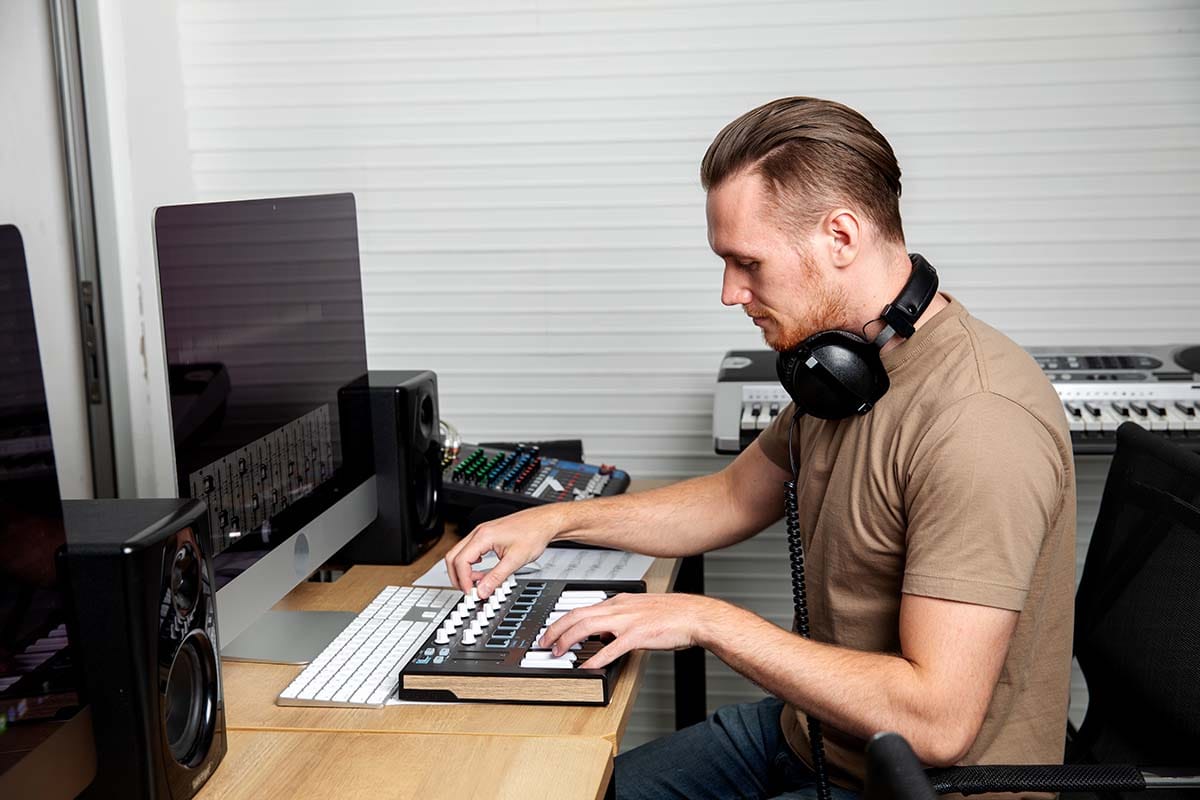
If you train in a gym without recording your weights, it is difficult to know if you are getting stronger without some kind of tracking. Sure, you might lift more one day, but maybe not on another day. Well, this same principle applies to music production.
Recording your sessions provides tangible proof of your growth over time, keeping you motivated when a project feels difficult.
You see, producers often make the mistake of listening to their latest song to see if it is 'better' to judge progress. But this is a trap! It causes producers to pay attention to external validation (likes, comments, etc.) instead of skill-building honesty.
And then, if the general public doesn't like a song, those feelings of doubt multiply - and that sucks.
So, break the cycle and record your results. Take the drills that I talk about later in the article and test yourself. If you get more done, you're improving. If you get your tasks done faster, you're improving. Whether or not someone likes one of your songs has no bearing on the truth of your skill building.
What to Track in Your Session Log
Keep a simple notebook or digital doc on your desktop and record three things at the end of every session:
What You Worked On: "Spent 30 minutes practicing sub-bass sidechain compression."
What Struggled With: "Had trouble getting the kick and bass to sit together without muddying the low end."
The Next Action Step: "Next session: cut 200Hz on the synth bass and re-check the key alignment."
Writing down your specific struggles transforms vague frustration into targeted learning goals for your next practice block.
It also frees up valuable mental headroom so you are able to clear up that brain space for more important tasks.

Personal Challenges and Drills for Music Producers
Exercises and drills are not meant to produce polished commercial releases; they are designed to build speed, focus, and adaptability under controlled conditions.
Let's talk about three core drills to improve your music production skills:
The Time Challenge (Speed Drills): When we get faster at a task, we improve our entire workflow. Speed drills demand that our brains adapt to perform better.
The Skills Focus (Segmented Production): By looking at only one step of the production process and drilling on it, you get better for all of the associated tasks around that step in the song-making process.
The Creativity Challenge (Forced Constraints): When we force constraints on a project, we also force our brain to adapt. Limiting number of plugins or forcing a song structure are ways to do this.
The Time Challenge (Speed Drills)
Set a timer for 10 or 15 minutes with a single goal: build a complete chord progression and melody from scratch before the timer expires. Build a song section. Get a volume balance in your mix. See how many cool drum beats you can make within the time limit. How about editing a vocal recording? Anything can work here.
Because you are racing the clock, your analytical brain does not have time to second-guess choices or tweak plugin parameters. Speed drills force you to trust your instincts and make fast, decisive choices.
Play with the time limit - if you start to smoke it, then lower it down to make yourself even faster. Have fun with this.
Very important: When you first start speed drills, do not worry about the 'perfection' of the result here - the goal is to see how far you can get in the time limit. Expect not to get far at first but also expect to get further in less time as you practice this very important drill. One measure of progress is the quality of work you are able to complete in a short time.

The Skill Focus (Segmented Production)
Dedicate an entire session exclusively to one skill associated with making a song. It can be anything you want, especially those areas that you need to shore up your skill levels.
Here are some great ways to drill for a skill focus:
Work on transition risers
Building five distinct drum fills
Build up a melody from a motif
Build a chorus section from a melody
Build a song structure from a chorus
Arrange a song (whole or a single section)
Create some counter melody options
Make a volume balance of your arrangement
Mix a group of instruments
Master one of your songs
Isolating a single element allows you to dive deep into that specific technique without the pressure of completing a full track around it. And there are plenty of different steps in the music-making process to isolate and drill on, so boredom should not be an issue here.
The Creativity Challenge (Forced Constraints)
Have you ever found yourself slowed down because of too many options? Well, this challenge is all about removing that discomfort. Because unrestricted options lead to decision paralysis, the goal here is to force strict limitations on your session to force your brain to adapt.
Here are three examples of how to apply constraints in this creativity drill:
The 24-Hour Challenge: Write a whole song from beginning to end mixed and mastered all in 24-hours firm. This may seem crazy, but you would be surprised at how much fluff you cut out when the clock is ticking. (Pro Tip: This is also a great exercise to drill for sync briefs, if you pursue that route in your production career.)
Instrument Limitations: Limiting the number of instruments you can use to a very low number is a great way to see how far you can push your creativity when your sonic palette is reduced. What if you could only use cellos for a song? How much of a song could you make? What if you had to use only two instruments that did not normally go together, like a bassoon and an electric guitar or something like that? What could you make with that?
Song Structure Match: Map out the song structure of a song, especially one in a genre that you do not work in. Then, built a song that strictly matches that other song's genre. To really push this, see how far you can push things away from the original song's genre.
Developing a Mindset of Play (Escaping the Perfectionism Trap)
The single biggest reason producers leave 80%+ of their song ideas unfinished is perfectionism. Perfectionism is not a mark of high standards; it is fear of judgment disguised as quality control. It is how ego messes with your head to talk you out of putting your creations into the world.
When you sit down at your DAW expecting every session to yield a masterpiece, you create immense pressure. That pressure forces you into edit mode too early, causing you to tweak a kick drum EQ for an hour instead of writing the second verse. And when you switch to edit mode, you kill your creative ability.
Shift your mindset from work to play. Approach your DAW as a sandbox for experimentation. Allow yourself to make bad sounds, write weak melodies, and mess up arrangements. The path to writing great songs is paved with dozens of mediocre drafts that taught you what not to do.
Your creative mode thrives in a play-like environment. When the thrill of discovery fueled by curiosity combines with a spirit of play, amazing things can come to life.
There is a great saying that says, "Good judgment comes from experience, and experience comes from bad judgment." Give yourself the grace of playing without expectation and you will leap forward towards great musical judgment.
Frequently Asked Questions
How long does it take to get good at music production?
While this will depend on where you are starting, with a consistent daily practice routine of 30 to 60 minutes, most producers see significant improvements in their technical confidence, speed, and track completion within even three months, let alone at the 6 to 12 month timeframe.
Because each person moves at different speeds at different times, point your attention away from 'getting good' and just focus on building your skills. Focus on the small things that you can control right now, and your skills will improve before you know it.
How do I stay disciplined when I do not feel like making music?
Lower the barrier to entry. Tell yourself you only have to work for five minutes. Often, the hardest part is simply opening your DAW. Once you start a small task, momentum usually carries you through the rest of the session. And, if you have templates already setup to get to work then you are ahead of the game.
Should I practice music production or work on full songs?
Both. Use dedicated practice blocks (20–30 minutes) to build isolated technical skills like synthesis or EQ. Then, apply those refined skills during longer composition sessions dedicated exclusively to finishing full tracks.
There is no reason to limit yourself here - it is more important to mix things up than to look for one 'right' length of time when practicing.
Where to Go Next
A structured practice routine provides the consistency needed to turn raw ideas into finished music. By rotating your focus, tracking your struggles, and using constraints to bypass perfectionism, you build a creative process that feels steady, productive, and enjoyable.
When you start drilling and practicing regularly, it is normal to experience some frustration at some point. Typically, this comes from where we think we should be (the ego talking) and where we are now.
How to Stay Motivated: When the going gets tough, and it will get tough at some point, it is really critical to know how to stay motivated and push through without burning out. This article teaches how to do that.
Keep your chin up, your head clear, and your work focused - grab those little bits of time to keep building your skills and you will grow into the producer you are meant to be.
One great way to practice is by identifying the separate steps of the song-making process and know what goes on during each step. The free, 35-page Embervane Sparkflow Map does exactly this, with a detailed framework that not only helps you to get from idea to finished song but also lists the pitfalls to avoid in each stage of the process.
Another great skill to drill with is using MIDI to write melodies, chord progressions, build out song structure and arrangements. Our free MIDI Madness Tier 1 course makes sure you are up to speed with your MIDI skills to put all of that to work in your workflow.
Get yourself drilling with practice sessions and watch those skills grow!
Found this guide helpful?
Spread the word and share with another creator.
Return to How to Build a Productive Music Workflow Topic Hub
About the Author

Jim is the creator of Embervane - a lifelong music maker with a curiosity‑driven approach to creativity and learning. He has been playing drums since age nine and composing seriously since 2018, continually refining his craft through study, experimentation, and hands‑on practice.
With a background in chemistry and more than two decades of studying behavioral psychology, Jim brings a unique blend of scientific thinking and human understanding to music education. He beta‑tests tools for companies like Mastering the Mix, Kit Plugins, and Soundiron, which keeps him close to the evolving landscape of modern production.
Jim isn’t a celebrity producer or award‑winning engineer - he’s a creator who remembers exactly what it feels like to struggle, learn, and grow. His mission is to help other music makers build clarity, confidence, and momentum in their craft.
Jim is the creator of Embervane - a lifelong music maker with a curiosity‑driven approach to creativity and learning. He has been playing drums since age nine and composing seriously since 2018, continually refining his craft through study, experimentation, and hands‑on practice.
With a background in chemistry and more than two decades of studying behavioral psychology, Jim brings a unique blend of scientific thinking and human understanding to music education. He beta‑tests tools for companies like Mastering the Mix, Kit Plugins, and Soundiron, which keeps him close to the evolving landscape of modern production.
Jim isn’t a celebrity producer or award‑winning engineer - he’s a creator who remembers exactly what it feels like to struggle, learn, and grow. His mission is to help other music makers build clarity, confidence, and momentum in their craft.


©2026 Embervane LLC. All rights reserved. Embervane™ is a trademark of Embervane LLC.